What you're looking at
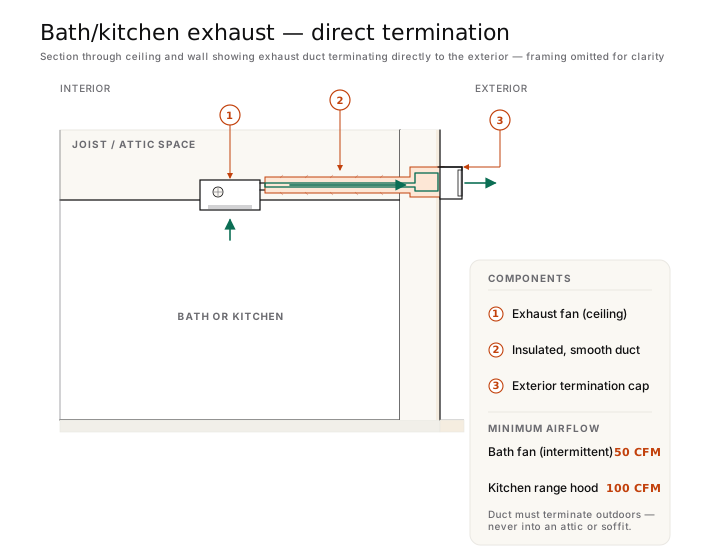
A section view through a ceiling and exterior wall of a residence. A bath or kitchen exhaust fan sits in the ceiling plane and pulls moist or grease-laden air out of the room. From the fan housing, an insulated smooth-wall duct runs through the joist space, turns into the exterior wall cavity, and exits through a louvered termination cap on the outside face of the wall. The louvered cap carries a backdraft damper so outdoor air does not blow back into the room when the fan is off.
The accent-teal arrows trace the airflow path: air enters the fan grille from the room, travels through the duct, and discharges to the outdoors. The duct never empties into the attic, the soffit cavity, the crawlspace, or any other concealed space inside the building envelope.
When this matters
Title 24 requires every bathroom to have at least a 50 CFM intermittent exhaust fan, and every cooking range to have a vented range hood sized at 100 CFM or higher. The catch — and the one that fails plan check most often — is that the duct has to terminate outside the building. Dumping a bath fan into the attic is one of the most common moisture-damage causes in California residences: warm, humid air condenses on the cold underside of the roof deck every winter morning, and within a few seasons the sheathing rots.
Designers should call out the termination location on the mechanical plan, specify insulated duct for any run that passes through unconditioned space (so the duct itself does not condense), and pick a termination cap with an integral backdraft damper. For range hoods over 400 CFM, makeup-air provisions also apply — that is a separate detail.
Related
- Whole-house mechanical ventilation (IAQ fan sizing)
- Range-hood makeup-air requirements for high-CFM hoods
- Attic ventilation and moisture control