What you're looking at
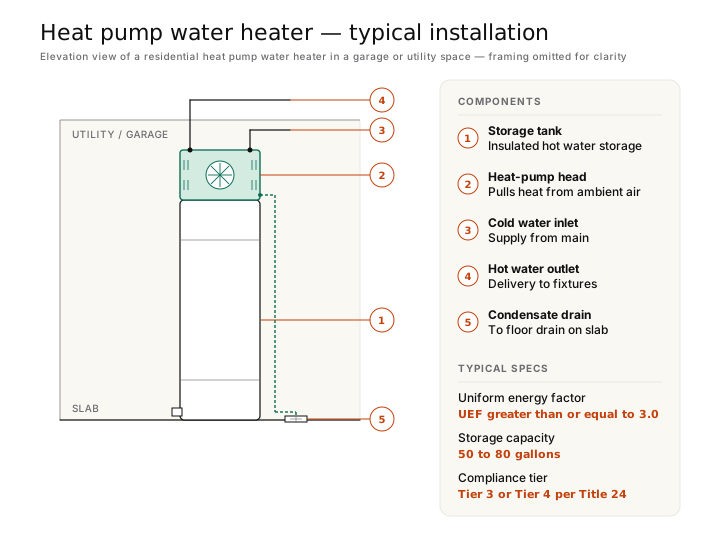
A side elevation of a residential heat pump water heater (HPWH) sited in a garage or utility space. The vertical storage tank sits on the slab; the heat-pump head — a sealed module with a fan, evaporator, and small compressor — is mounted on top. The head pulls warmth out of the surrounding garage air, transfers it through the refrigerant loop, and dumps it into the water in the tank below.
Three field connections are shown: the cold water inlet from the main, the hot water outlet running off to the fixtures, and a small condensate line draining from the head down to a floor drain in the slab. A dedicated 240V circuit (not drawn) provides backup resistance heat for high-demand recovery.
When this matters
Title 24 prescriptive requirements push almost every new residential project toward an HPWH (Tier 3 or Tier 4, with a uniform energy factor of 3.0 or higher). The siting decision is rarely neutral: a 50–80 gallon tank with a heat-pump head needs about 1,000 cubic feet of conditioned or semi-conditioned air around it to operate efficiently, plus headroom above for the head, plus a routed condensate path. A garage corner like the one drawn here is the most common solution because it gives the equipment ambient air to harvest, drainage to a slab, and easy access to the cold main and the hot distribution run without cutting into living space.
When the only available location is a small interior closet, designers either need to add transfer grilles to a larger adjacent space or switch to a split / ducted HPWH configuration — both worth flagging early in the design conversation rather than discovering at framing.
Related
- Hybrid and HP Envelope design options both specify an HPWH at the prescribed tier
- See the project's compliance summary for the exact tier and UEF assigned to your climate zone
- For tank-only space planning, allow at least 24 inches of head clearance above the unit