What you're looking at
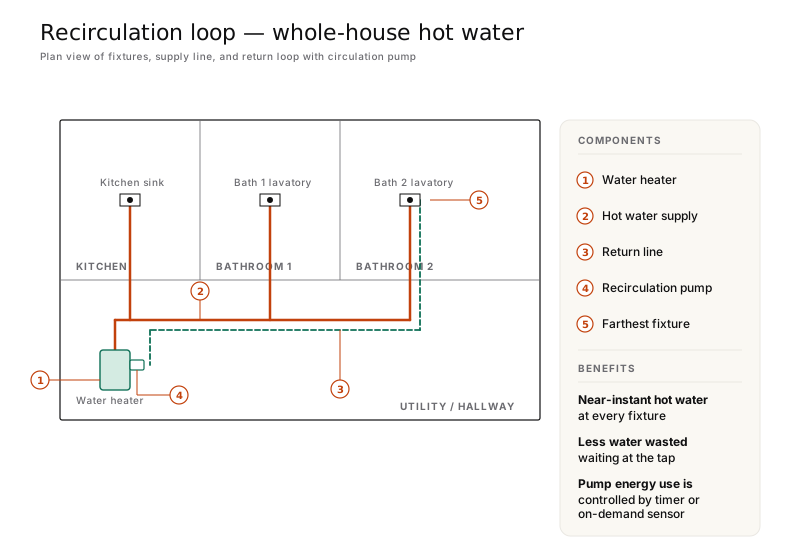
A small residential floor plan with three plumbing fixtures along the top wall — a kitchen sink and two bathroom lavatories — and a water heater tucked into the utility area at the lower left. The hot water supply line (orange) climbs out of the water heater, runs east along the hallway, and branches north to each fixture. A second line (dashed teal) starts at the farthest fixture, runs back through the hallway, passes through a small recirculation pump, and returns to the water heater's inlet.
The closed loop is the whole point. Without a return line, hot water sits in the supply pipe between draws, cools off, and gets dumped down the drain the next time someone opens a tap. The pump keeps water circulating through the loop so any fixture sees hot water within seconds of opening the valve, regardless of how far it sits from the heater.
When this matters
Recirculation is worth considering whenever the farthest fixture is more than roughly 30 feet of pipe from the water heater, or when a household runs the hot tap and waits long enough to fill a glass before useful hot water arrives. It is one of the simpler upgrades to specify on a remodel because most of the plumbing already exists — the addition is the return line and a small pump, often controlled by a demand sensor or timer to keep pump energy under control.
For Title 24 compliance, the design choice that matters most is the pump control strategy and the insulation level on both the supply and return pipes. The diagram shows the topology; the spec sheet decides whether the loop saves water and energy or just spins.
Related
- Equipment overview: heat-pump water heater
- Distribution detail: insulated hot water lines
- Compliance reference: residential domestic hot water requirements