What you're looking at
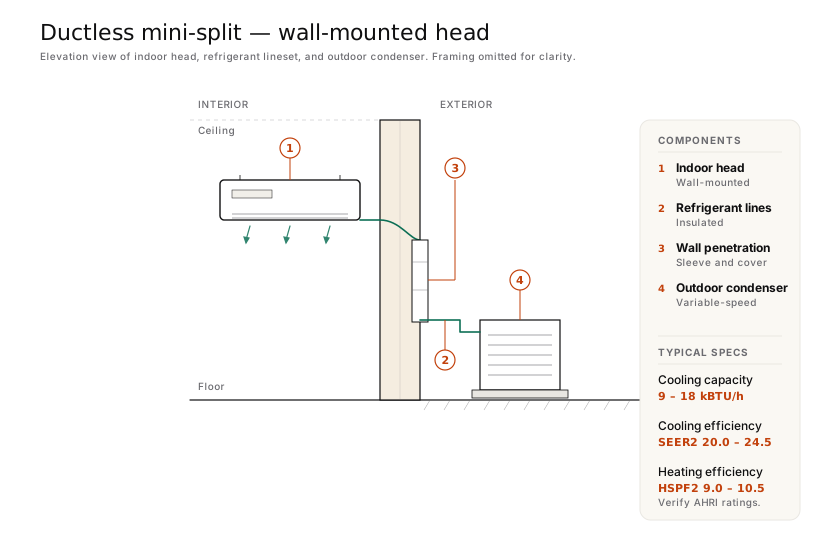
A side-elevation cut through one room showing the three physical parts of a ductless mini-split installation. The indoor head sits high on the interior face of the exterior wall — typical mounting puts the top of the unit roughly 6 to 8 inches below the ceiling so the unit can throw conditioned air downward across the room. A small-diameter refrigerant lineset (one insulated suction line, one liquid line, plus a condensate drain and control wires bundled together) exits the back of the head, passes through a 3-inch sleeve in the wall, and then runs down the exterior face inside a paintable lineset cover to the top of the outdoor condenser, which sits on a small concrete or composite pad at grade.
No supply ducts, return ducts, plenums, or air handler. That is the whole point of the system — the refrigerant carries the heat instead of air carried in sheet-metal ducting.
When this matters
Ductless mini-splits are the default heating and cooling system for several Title 24 scenarios:
- Detached additions where the existing central system cannot physically reach the new space. The Confirm step's "separate mini-split" HVAC topology selection emits this configuration; extended ducts are blocked because they cannot cross open ground.
- Attached ADUs and small additions where running new ducts through existing finished walls would be invasive. One outdoor unit can also drive multiple indoor heads (multi-zone), so a two-bedroom ADU often uses one condenser feeding two wall-mounted heads.
- Alteration-only projects that replace an old wall furnace or window AC. Mini-splits are a clean upgrade path because they need only a 3-inch wall penetration and a 240V circuit at the outdoor unit.
Performance ratings on the right panel are the band that current variable-speed inverter units occupy. Title 24 prescriptive minimums for a heat pump are SEER2 15.2 and HSPF2 7.8 in most climate zones, so any modern mini-split clears the floor with margin; the High-Performance Envelope and Hybrid options call out HSPF2 9.0 specifically to lean on that headroom.
Related
- HVAC extended ducts — the alternative topology where one central air handler in the existing residence also serves a flush-attached addition through extended supply ducting.