What you're looking at
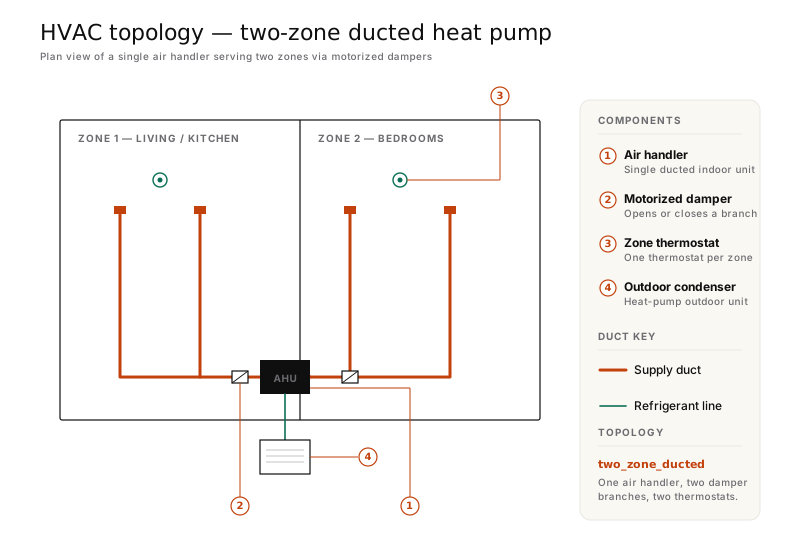
A single ducted heat pump that conditions a residence split into two zones. One indoor air handler sits in the middle of the house with its supply trunk splitting at a Y just past the cabinet. Each branch carries a motorized damper that opens or closes based on a dedicated wall thermostat in that zone — Zone 1 covers the living and kitchen side, Zone 2 covers the bedrooms. A single outdoor condenser, connected to the air handler by one refrigerant line, handles both zones.
The diagram strips out furniture, doors, and framing so the ducting, dampers, thermostats, and equipment relationships read at a glance. Two interior zone thermostats are drawn as small wall-mounted circles on the perimeter walls of each zone.
When this matters
Zoned ducted systems give the homeowner room-by-room temperature control without the cost or wall-cabinet footprint of a separate mini-split per room. They also let the heat pump throttle down when only one zone is calling — useful when bedrooms need cooling overnight but the living side does not. Common alternatives are a single-zone ducted system (cheaper, less granular comfort) or a multi-zone mini-split (no ducts at all, but each indoor head is visible on a wall or ceiling).
For Title 24 compliance, the topology you pick affects how the equipment is modeled, where ducts are assumed to run, and which zoning credits are available. Picking the right topology early avoids a redesign mid-permit.
Related
- Extended-duct topology (one air handler serving an existing residence and an addition)
- Separate mini-split topology (no shared ductwork between zones)